For EPC contractors, owners, and project teams delivering refineries, petrochemical complexes, LNG trains, power plants, steel mills, and large brownfield projects anywhere in the world, safety performance is no longer just about compliance or reputation. It is one of the most powerful drivers of project margin, schedule certainty, liquidated damages (LD) avoidance, insurance costs, and future tender success.
Most industrial sites still rely on manual observations, paper permits, and reactive incident management. That model cannot keep pace with today’s megaprojects, often 5,000–20,000 workers, multi-year durations, and zero tolerance for delay from owners and regulators.
Contents In This Blog
The organizations winning the highest-margin work have shifted the conversation from
“How much will better safety cost?”
to
“How much is suboptimal safety already costing us in cash, time, and competitive edge?”
Below are six universal, measurable ROI levers that consistently appear on large capital projects worldwide when modern digital safety systems are deployed.
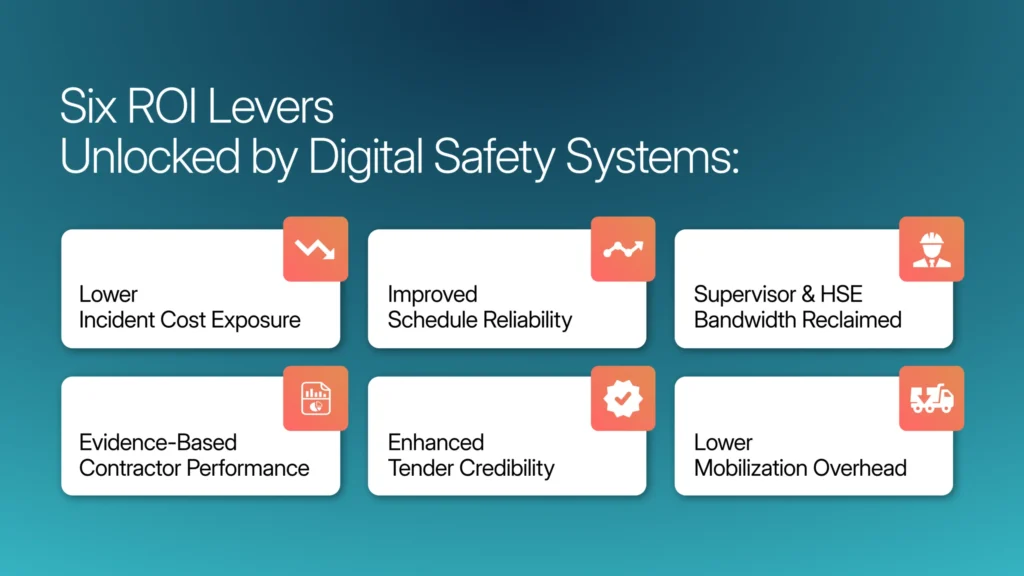
A single lost-time injury or fatality routinely exceeds $1–10 million once medical, legal, downtime, reputational, and insurance-premium impacts are included.
Continuous AI monitoring (T-Pulse Safety) detects unsafe behaviours and conditions—missing fall protection, red-zone entry, working under suspended loads—in real time. Preventing just one or two serious events across a project or portfolio typically delivers full payback on the digital platform many times over.
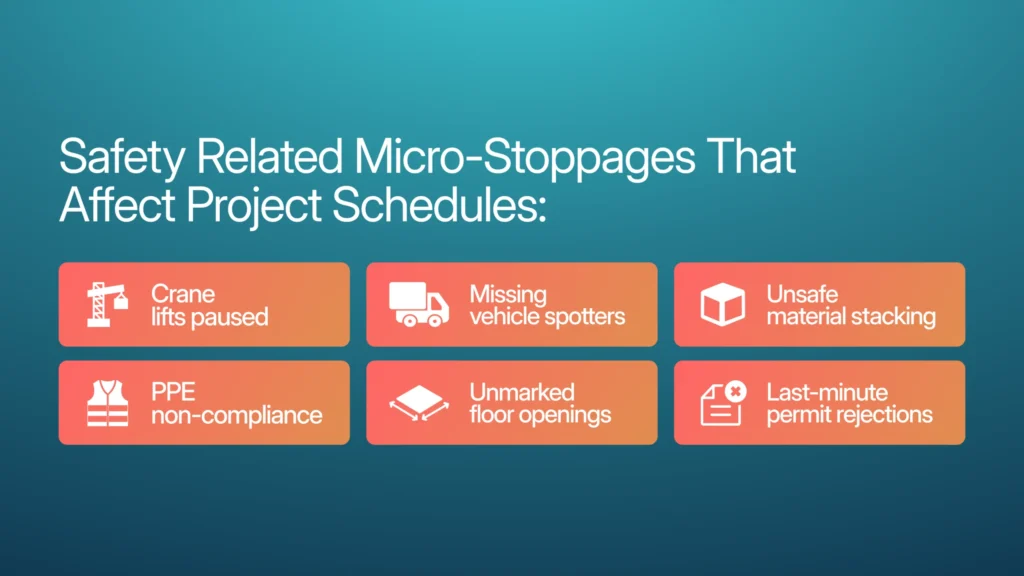
The silent schedule killer is thousands of short stoppages:
- Crane lifts paused for personnel in exclusion zones
- Hot work or confined-space entry delayed by missing barricades or fire-watch
- Work-at-height held for guardrail or housekeeping fixes
- Last-minute permit rejection
These 15–60-minute interruptions accumulate into hundreds of lost critical-path hours.
T-Pulse Safety’s real-time zone intelligence and T-Pulse iPTW’s automated visual precondition validation routinely cut these disruptions by 60–80%, protecting float and reducing LD exposure on every project, regardless of location.
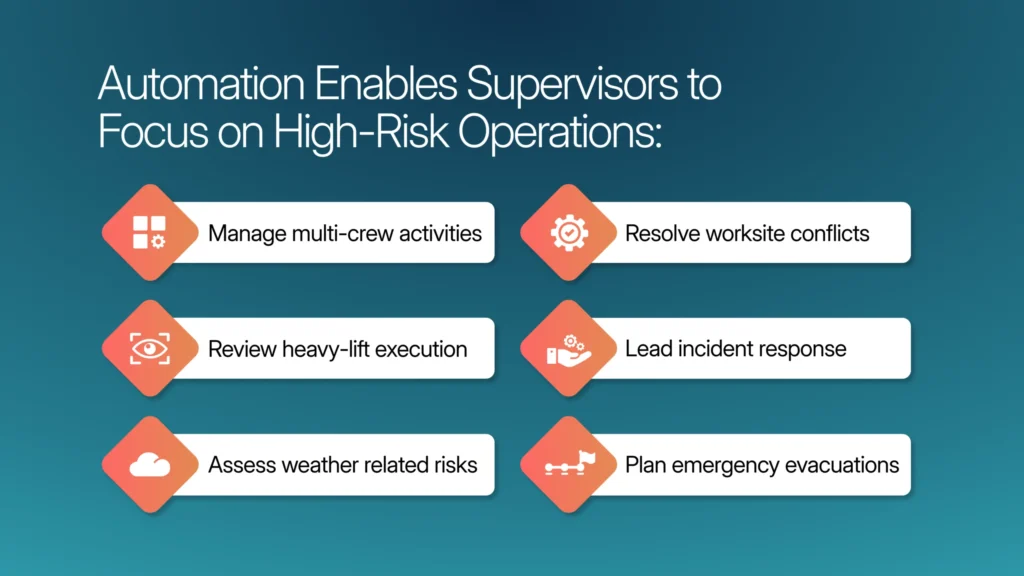
Experienced supervisors and safety professionals currently spend 30–50% of their day on routine compliance policing that cameras and AI can handle 24/7 with higher consistency.
Automating PPE detection, zone monitoring, and basic housekeeping checks frees them to coach crews, manage simultaneous operations (SIMOPS), and solve complex risks—lifting overall productivity and quality.
Contractor safety behaviour is the largest single predictor of rework, productivity variance, and commercial disputes on multi-tier sites.
T-Pulse Cockpit delivers privacy-compliant, aggregated leading indicators (observation frequency, close-out speed, violation trends) by contractor, package or area. Clients worldwide report 15–30% lower contractor-driven rework and smoother progress payments when conversations are data-driven instead of anecdotal.
Safety is now weighted 15–25% in almost every major owner tender evaluation—whether in the Middle East, North America, Asia-Pacific, or Europe.
Digital platforms provide auditable evidence of real-time monitoring, rapid response, and continuous improvement. Organisations using T-Pulse consistently achieve higher technical scores, secure global framework agreements, and gain access to larger, more complex projects.
Traditional safety systems are rebuilt from scratch on each project—new checklists, new training, new layouts.
A mature T-Pulse deployment evolves into a standardised, configurable blueprint:
- Pre-defined digital zones and rules for cranes, scaffolding, excavations, hot work
- Reusable iPTW workflows and Cockpit templates
- Cross-project learning loop
Result: 40–60% faster mobilisation, lower setup costs, and compounding performance improvement across the entire portfolio—often the single largest long-term ROI lever.
The T-Pulse Platform – Purpose-Built for Global Heavy Industry
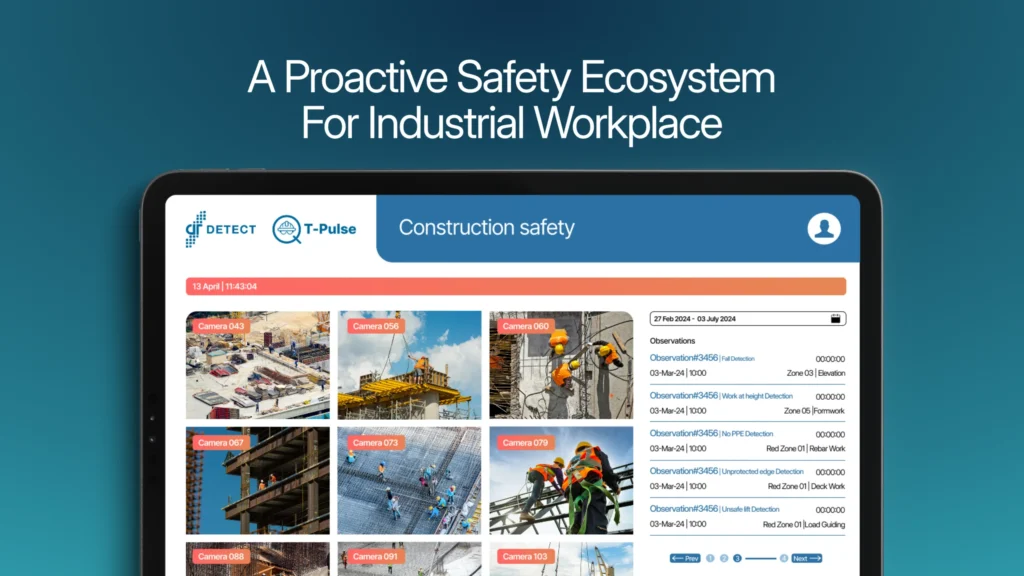
T-Pulse Safety – 24/7 AI hazard detection (PPE, zones, behaviours, fall protection, vehicle-person separation)
- T-Pulse iPTW – Camera-verified digital permit-to-work with full audit trail
- T-Pulse Cockpit – Multi-site executive and contractor dashboards, configured to meet regional privacy regulations
All modules work with existing site cameras and integrate seamlessly into global project controls ecosystems.
The Bottom Line
When safety technology is evaluated only on purchase price, it looks expensive.
When measured against these six proven levers, using real project hours, LD rates, and insurance data, it consistently returns 4–15× ROI within 12–24 months.
If you lead safety, project controls, or commercial strategy on refinery, petrochemical, power, LNG, or metals projects anywhere in the world, treating safety as a strategic investment has become table stakes for remaining competitive.
Want to see exactly what these six levers are worth on your current or upcoming project?
Book a 30-minute personalized ROI diagnostic
We’ll build a no-obligation financial model using your project’s size, man-hour exposure, and schedule risk.
Your next margin improvement is probably hiding in your safety performance.