Contents In This Blog
How Night Operations Change Security Performance
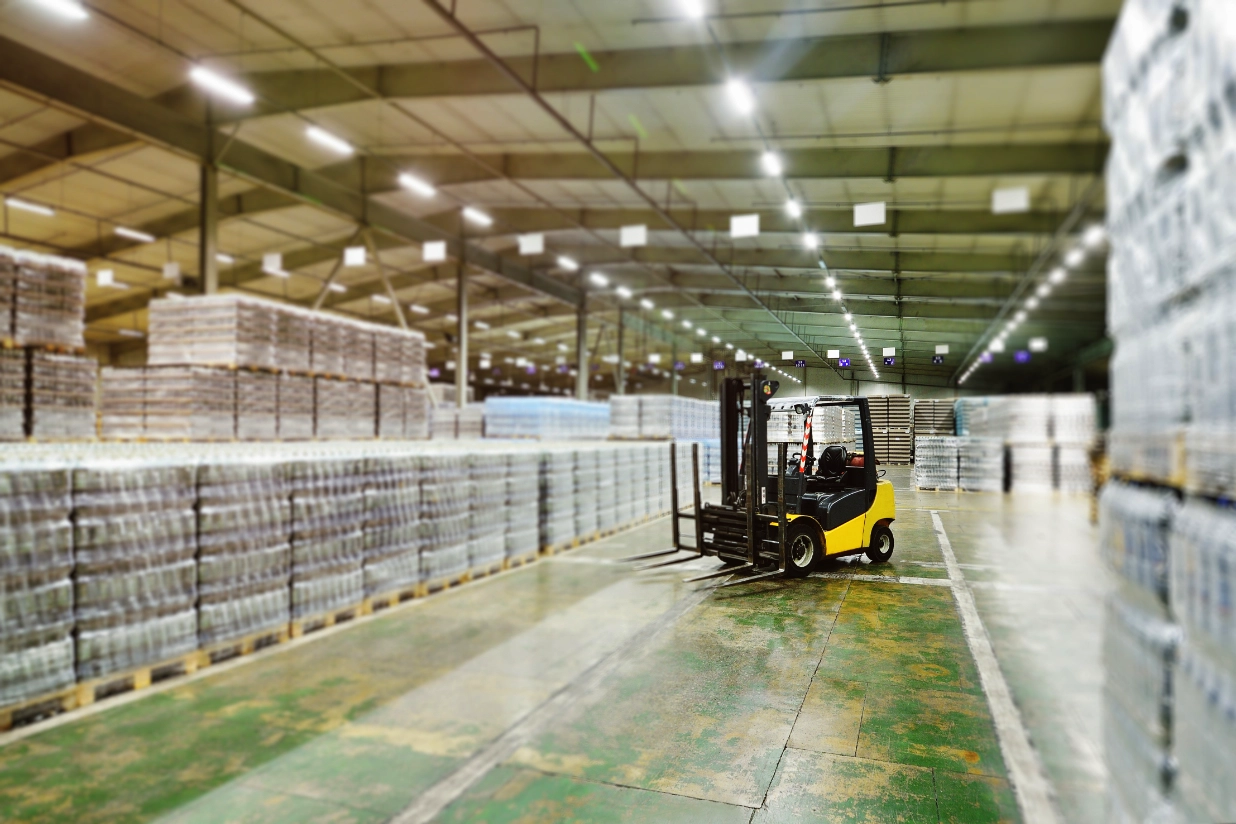
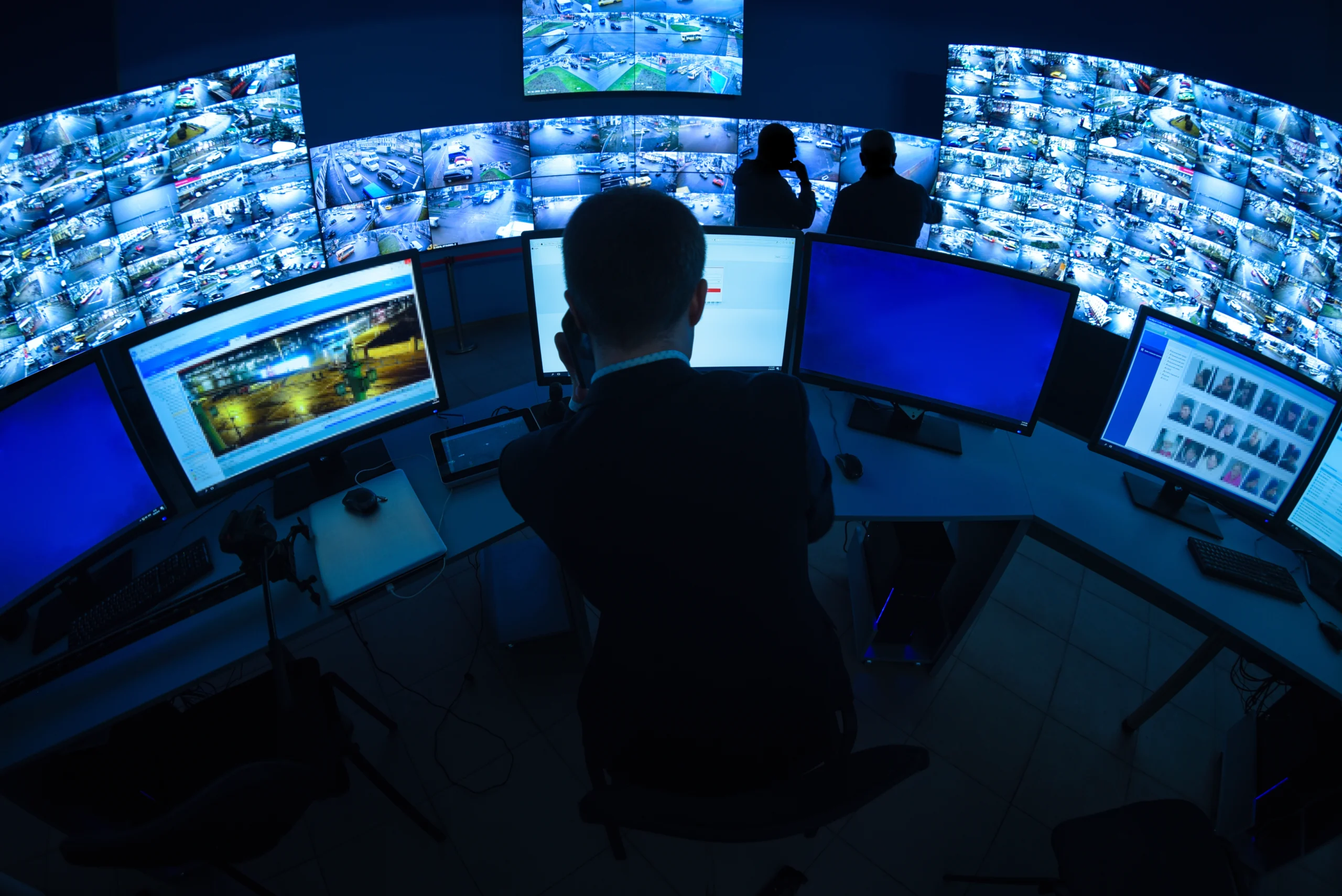
Industrial security performance consistently weakens at night as visibility drops and operator attention declines. These conditions also drive a sharp increase in low-quality alerts, causing alarm fatigue to accumulate faster during night operations.
Where Thermal Delivers the Most Value
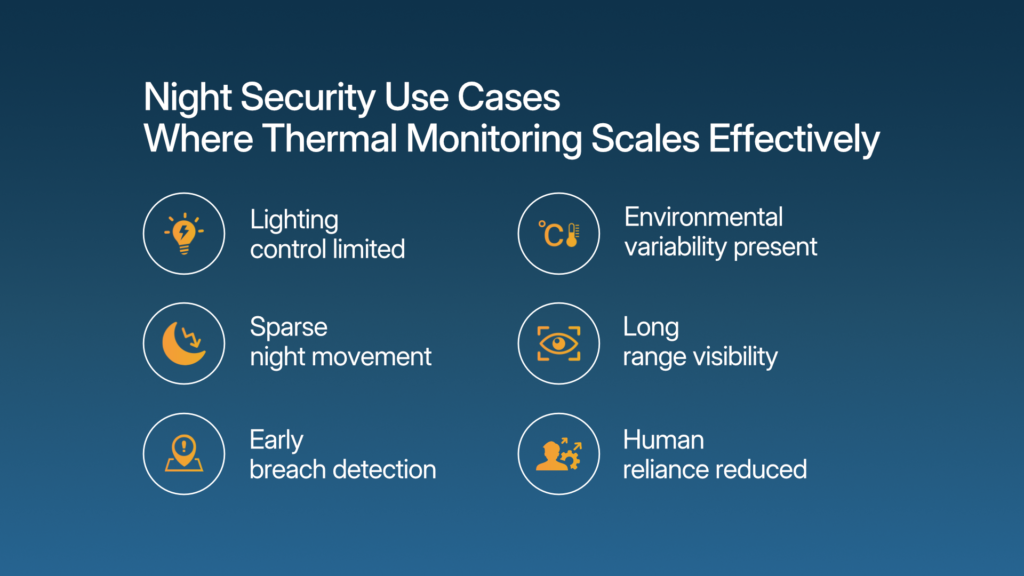
Thermal + AI is best-fit when:
- Lighting is inconsistent or poor
- Headlight glare, shadows, or reflections distort visible feeds
- Perimeter lines are long and low-traffic
- You need presence detection at distance
Limits of Thermal Based Security Systems
Thermal is not a blanket upgrade when:
- Identification-level details are required, such as faces or uniforms.
- Zones experience high operational traffic where rules and context outweigh sensor capability.
- The issue primarily stem from response workflows or governance rather than detection
How to Select Locations Suitable for Monitoring with Thermal Cameras
1. Choose a night-critical perimeter segment
2. Define success metrics: false alarms/night, acknowledge time, dispatch time and verified incident rate
3. Ensure escalation and evidence are included in the test:
- Notifications via mobile/WhatsApp/text
- Evidence trails and retention
4. Tune detection thresholds by time window, distinguishing night from day
5. Document learnings and standardize where results are repeatable
Missteps That Undermine Thermal Security Systems
- Evaluating thermal only on detections, rather than response SLAs
- Absence of zone-specific rules (treats all events with high priority)
- Not running the pilot long enough to capture night variability
- Gaps in readiness governance, including camera uptime
FAQs
1. Do thermal cameras reduce false alarms at night?
They can, particularly in environments where visible light conditions are unstable.
2. Where should thermal be used first?
Perimeter segments with poor lighting, high glare, or repeat night incidents.
3. Is thermal necessary for all sites?
No, use it where night conditions materially degrade visible-spectrum performance.
4. What metrics prove success in a thermal pilot?
False alarms/night, response SLAs, verified incident rate, evidence completeness.
5. Does thermal replace escalation workflows?
No. Detection must still feed a governed response loop (routing, SLAs, evidence, closure).
6. Can thermal support process-industry scenarios?
Yes, particularly for perimeter and restricted zone monitoring where night detection quality matters.