
Most industrial organizations invest significant effort in planning work. Maintenance schedules, resource allocation, and downtime management are defined within ERP systems.
ERP and CMMS platforms establish what work is planned. PTW systems govern how that work is executed safely. When these systems operate independently, the same job is interpreted differently across teams, leading to delays, rework, and scope drift.
An ERP integrated permit to work system closes this planning to execution gap.
Contents In This Blog
The Hidden Risk Created by Disconnected ERP and PTW systems
When ERP and permit to work systems operate independently, teams face recurring execution friction:
- Duplicate data entry
- Inconsistent interpretation of work scope
- Delayed permit issuance
- Conflicting versions of the same job
More critically, safety controls are introduced after planning decisions are finalized, rather than being embedded within them.
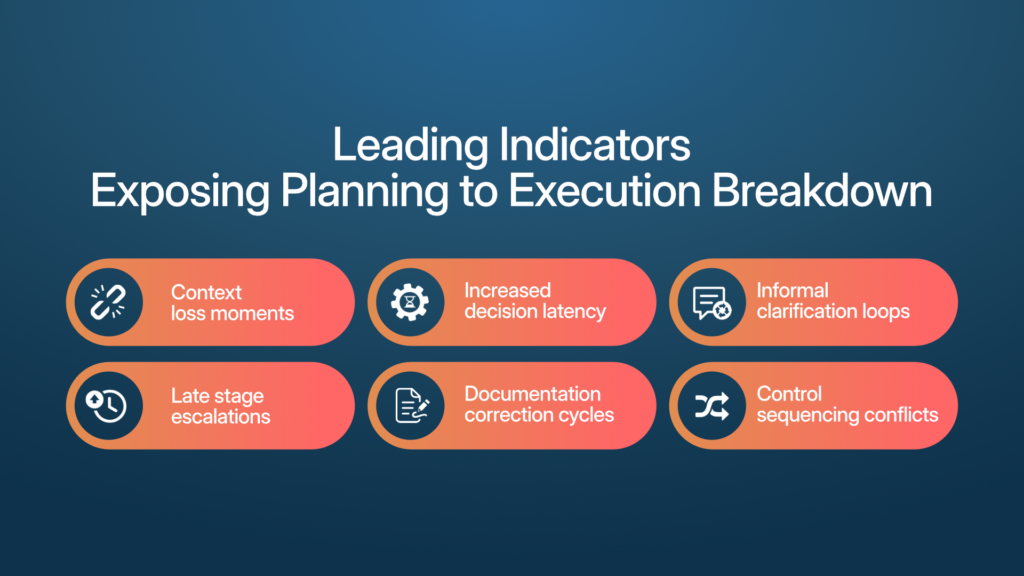
Where Planning to Execution Gap Becomes Visible
The gap between planning and execution is subtle, yet consistently present.
1) Scope translation errors
Work orders define what must be done. Permits define how it is executed safely. When they operate separately:
- Equipment IDs are mismatched
- Work descriptions are reinterpreted
- Permit types are misclassified
Each translation increases risk exposure.
2) Timing misalignment
Planned start and end times often differ from:
- Actual permit validity windows
- Shift boundaries
- Area availability
Without integration, these differences surface late, leading to rushed execution or unsafe extensions.
3) Manual safety interpretation
In disconnected workflows, safety officers are required to:
- Manually infer hazards from work descriptions
- Rebuild checklists from scratch
- Validate controls under time pressure
This introduces variability where consistency is critical.
What ERP Integrated PTW Systems Fundamentally Changes
Integration is not about convenience. It is about control. An ERP integrated PTW system ensures permits carry forward the same context, intent, and constraints defined during work planning.
1) Single source of truth for work scope
When permits are generated directly from work orders:
- Scope remains consistent
- Equipment and zones are accurate
- Duplicate entry is eliminated
Permits stop being reinterpretations and become extensions of planning.
2) Faster, safer permit creation
Structured ERP data enables:
- Reduced permit creation time
- Fewer information gaps
- Shorter approval cycles
Efficiency improves while maintaining procedural discipline.
3) Standardized safety application
ERP integrated PTW systems:
- Automatically apply site specific rules
- Map permit types to job categories
- Enforce consistent hazard controls across shifts
Safety becomes repeatable and independent of individual discretion.
4) Better coordination across teams
Operations, maintenance, and safety teams work from:
- The same scope definition
- The same time window
- The same execution assumptions
This prevents last minute conflicts and rework.
Standalone PTW Systems Vs ERP Integrated PTW Systems
Aspect | Standalone PTW | ERP Integrated PTW |
Data entry | Manual | Auto-generated |
Scope consistency | Variable | Standardized |
Approval speed | Slower | Faster |
Error rate | Higher | Lower |
Safety governance | Reactive | Proactive |
Integration turns PTW from a post-planning gate into a built-in safety layer.
How ERP Integration Drives Measurable Safety Gains
When permits reflect planning intent accurately:
- Work starts on time
- Execution is less rushed
- Extensions are controlled
- Deviations are visible earlier
Safety outcomes improve not through tighter enforcement, but through greater clarity in execution.
Addressing Common Misconceptions Around ERP Integration
- Flexibility concerns – ERP integrated PTW platforms continue to support operational adjustments, with full traceability.
- Data quality concerns – Integration often strengthens data discipline by identifying gaps early.
- Deployment timeline concerns – Modern IPTW platforms use APIs and configurable adapters to enable phased rollout.
Who Benefits Most from ERP Integrated PTW Systems
- Maintenance managers: Fewer delays and rework
- Safety teams: Consistent hazard application
- Operations: Smoother execution
- IT: Reduced shadow systems
- Leadership: Better audit and governance visibility
Integration aligns stakeholders around a shared operational reality.
Key KPIs to Measure After Integration
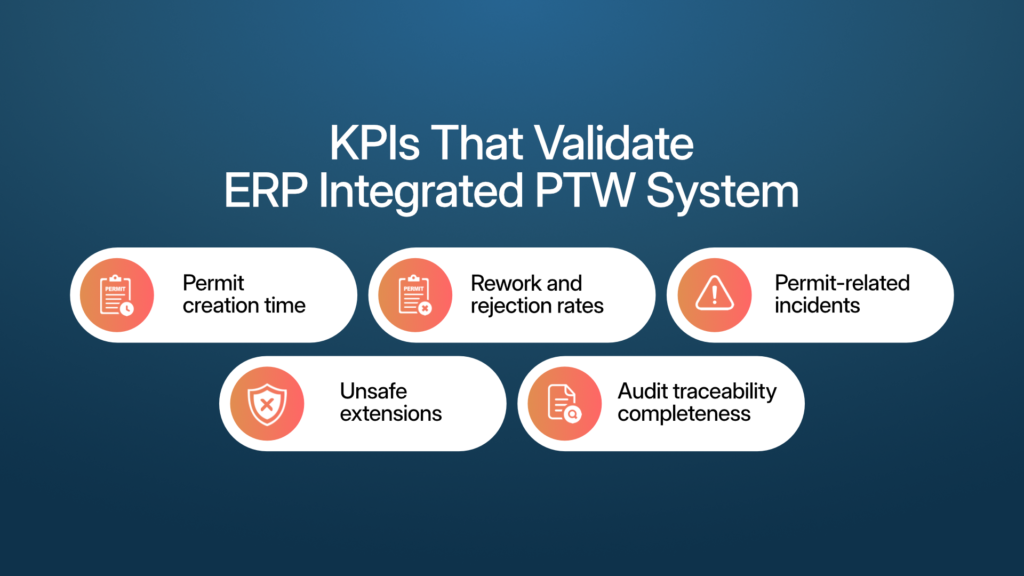
These measures confirm whether planning and execution operate as one system.
Planning and Safety Must Operate as One System
When permit to work systems operate separately from ERP, safety becomes an afterthought. When they are integrated, safety becomes structural.
ERP integrated permit to work systems ensure that what is planned, approved, and executed remains consistent every time. Permits inherit planning context and remain traceable from: work order → permit → closure.
That is how organizations close the gap between intent and action.
What ERP Integration Delivers
- Auto-fill equipment IDs, zones, schedules, work descriptions from ERP work orders
- Clear governance on what is the source of truth (scope in ERP, controls/evidence in IPTW)
- Standardized controls applied consistently across shifts
- Faster approvals due to completeness and fewer interpretation errors
What to track
- Creation time + Rejection rate
- Scope mismatch incidents
- Overdue / extension discipline
- Evidence completeness for audit
FAQs
1. Why is ERP integration important for PTW?
It eliminates duplicate entry, prevents scope drift, aligns timing with planned schedules, and creates a single operational truth between planning and safety execution.
2. What ERP/CMMS systems typically integrate with PTW?
Commonly SAP, Maximo, and other CMMS/ERP platforms via APIs, adapters, database views, or secure exports.
3. What data is usually pulled from ERP work orders?
Equipment or functional location, work description, planned start/end times, work order ID, and sometimes permit-relevant classifications.
4. What if our equipment/location master data isn’t clean?
Integration can still proceed, but data quality improvement should be part of the program, starting with pilot zones and critical assets.
5. Does ERP integration mean ERP becomes the source of truth for permits?
Typically, ERP is the source of truth for work scope, while IPTW is the source of truth for permit governance, compliance evidence, and execution controls.
6. How long does an ERP integrated PTW pilot take?
Most pilots focus on a limited set of permit types and zones with defined integration scope, then expand once KPIs are achieved.
7. What KPIs improve most after integration?
Permit creation time, rework rate, approval cycle time, and consistency of scope and equipment mapping.