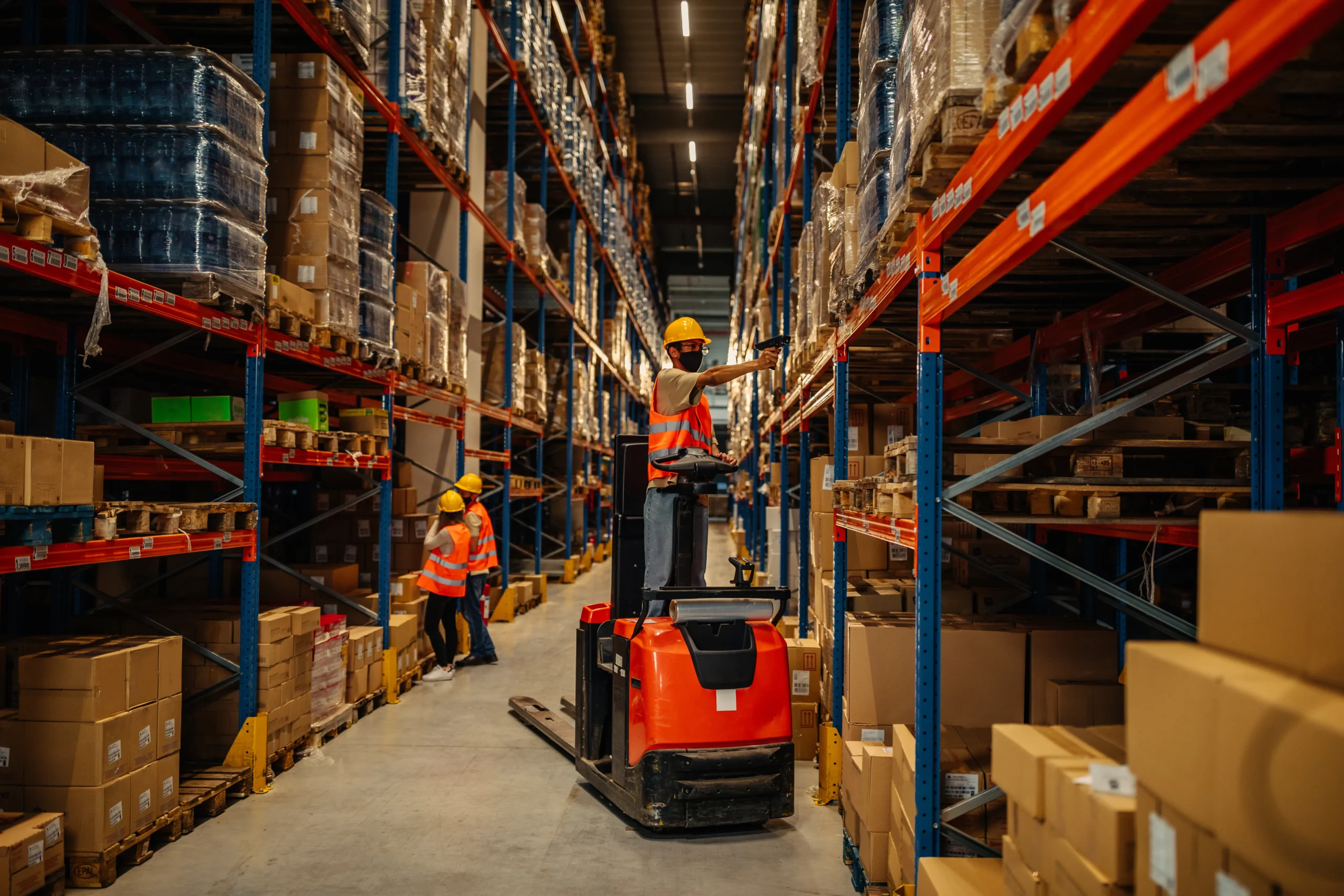
Refineries do not struggle because procedures are missing. They struggle because work unfolds under high permit density, dynamic operating conditions, and overlapping execution fronts.
At any given time, a single unit may involve:
- Multiple active permits including hot work, electrical, and confined space
- Multiple contractors and trades
- Simultaneous operations (SIMOPS)
- Strict time windows driven by production constraints
In this environment, a traditional permit-to-work system functions primarily as a documentation workflow rather than an execution control mechanism.
This is why leading refineries are adopting AI-driven Permit-to-Work (PTW) to reduce safety violations by transforming permits into real-time governance controls.
Contents In This Blog
Refinery Operating Conditions That Expose PTW Gaps
Permit violations in refineries are rarely driven by poor intent. They are the outcome of operational complexity.
1) High consequence zones with dynamic risk
Hydrocarbon areas, pressurized systems, rotating equipment, and live process boundaries create environments where small deviations can escalate quickly.
2) SIMOPS creates compounded hazards
Even when individual permits are independently compliant, risk materializes when:
- Hot work occurs near line breaking
- Vehicles move near scaffold work
- Multiple crews share congested work fronts
Conventional PTW systems do not consistently identify these overlaps at the right time.
3) The execution gap is harder to supervise
In expansive refinery units, supervisory coverage is periodic rather than continuous. Violations often occur between patrol cycles, particularly during handovers and late-hour operations.
What AI-Driven PTW Represents in a Refinery Environment
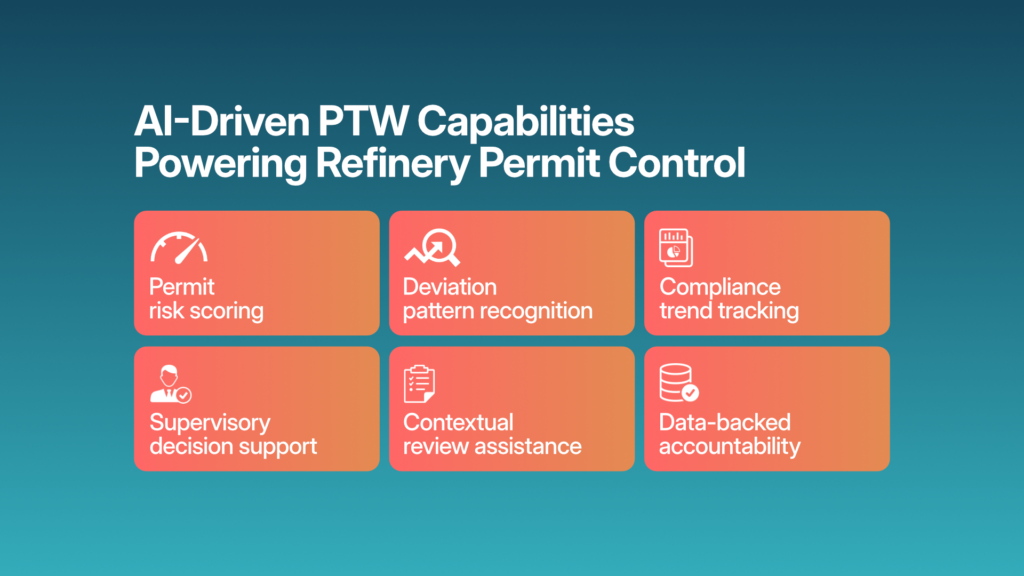
AI-driven PTW is not a user interface (UI) upgrade. It functions as a control layer that strengthens how permits are created, reviewed, enforced, and continuously improved.
A refinery-grade AI-driven PTW system typically enables:
- Auto-generation from SAP and ERP work orders
- Permit-type classification and control recommendations
- Zone-level visibility of active permits
- Continuous compliance monitoring during execution
- Safety insights that identify recurring risk patterns
The difference is simple, instead of treating permits as static forms, AI-driven PTW treats them as active risk controls.
How AI-Driven PTW Reinforces Permit Execution Governance
Step 1: Faster, more disciplined permit creation
In refinery environments, delays and quality gaps often originate at the permit creation stage because:
- Work orders are manually transferred into permits
- Scope descriptions lack consistency
- Checklists are rebuilt repeatedly
AI-driven PTW reduces this by:
- pulling equipment IDs, zones, and time windows from work orders
- recommending permit types and sub-types (e.g., welding vs grinding)
- automatically applying standardized controls and checklists
Result: Fewer approval rejections and less rework.
Step 2: Stronger permit review through risk prioritization
Refineries frequently generate more permits than approvers can thoroughly evaluate, particularly during shutdown periods.
AI supports review by:
- Prioritizing permits by zone criticality and permit type
- Flagging missing controls (gas test, fire watch, isolation)
- Highlighting historical non-compliance within the zone
Approvers focus on operational judgment rather than correcting data inconsistencies.
Step 3: Zone-level control of active permits
Refinery risk is inherently spatial. A permit must be evaluated within its zone and alongside other active work.
AI-driven PTW provides:
- Active permits by unit/zone
- Visibility into permit overlaps and potential conflicts
- Status transparency (pending, active, overdue, extended)
This enables operations teams to manage SIMOPS with clarity.
Step 4: Compliance monitoring during execution
Most PTW violations happen after approval, including:
- PPE lapses
- barricade breaches
- unauthorized access
- work extending beyond approved validity windows
Refineries mitigate these by integrating PTW with enforcement mechanisms such as:
- Camera-based monitoring in high-risk zones
- Automated alert workflows for deviations
- Escalation matrices based on severity and time window
Enforcement shifts from reactive response to preventive oversight.
Step 5: Learning loops that reduce repeat violations
High-performing refineries move beyond detection to recurrence reduction.
AI-driven PTW generates safety insights such as:
- Repeat violation types by permit class
- High-risk time windows (shift change, late hours)
- Zones with frequent non-compliance
- Contractor-specific patterns
These insights improve:
- Training focus
- Supervision placement
- Control effectiveness
- Permit templates and rules
The Violation Patterns AI-Driven PTW Systematically Reduces
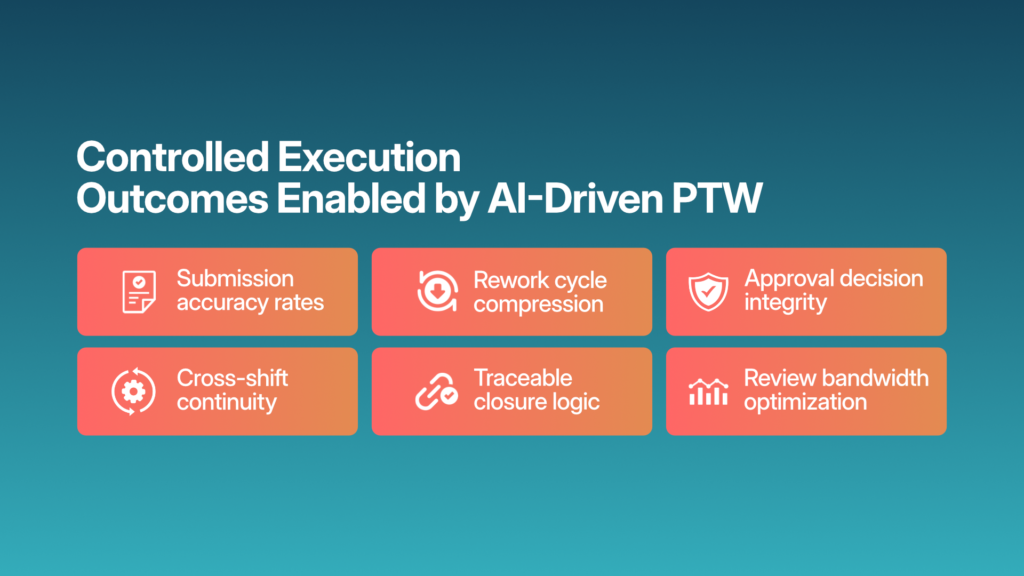
AI-driven PTW addresses violation patterns that typically emerge in complex refinery environments.
Key reductions include:
- Permit overruns and unsafe extensions – With validity windows actively tracked and enforced
- PPE and exclusion zone violations – Through monitored compliance rather than assumed adherence
- SIMOPS conflicts – Identified early through zone-level overlap visibility
- Checklist drift – Prevented through standardized and validated control application
Over time, the recurrence of violations diminishes as the system reinforces continuous improvement.
Metrics That Determine PTW Governance Strength
A refinery-ready PTW program evaluates outcomes across four performance dimensions.
Efficiency
- Permit creation time
- Rework rate for permits returned for correction
- Approval cycle time
Execution discipline
- Percentage of overdue permits
- Extension rate and reassessment compliance
- Work-start delays attributable to PTW
Compliance
- Violations per 100 active permits
- Repeat violations by zone / contractor
- Unauthorized presence within active permit zones
Governance
- Percentage of permits with complete evidence trail
- Investigation time reduction
- Audit traceability completeness
These indicators determine whether PTW is operating as a structured control system rather than a basic workflow.
Common Refinery PTW Pitfalls and How to Mitigate Them
1) Treating PTW as digital paperwork
When compliance is not actively monitored during execution, violations continue.
Avoidance: Link permits to zones and enforcement workflows.
2) Starting with too many scenarios
Attempting to monitor every scenario introduces noise and weakens operator trust.
Avoidance: Prioritize high-risk permits such as hot work and confined space within critical zones.
3) Ignoring shift transitions
Violation clusters frequently emerge during handovers.
Avoidance: Align insights and escalation rules to high-risk time windows.
4) No closure discipline
When violations are not formally closed with corrective actions, organizational learning stalls.
Avoidance: Enforce detection → Escalation → Closure traceability.
Why PTW in Refineries Must Move Beyond Documentation
Refinery operations are too complex for permit governance to rely on forms and periodic supervision.
AI-driven PTW reduces safety violations by:
- standardizing permit creation
- strengthening review quality
- delivering zone-level visibility
- enforcing compliance in real time
- building learning loops that reduce repeat risk
This is how leading refineries transition from procedural compliance to operational control.
FAQs
1. Why is PTW harder in refineries than in other plants?
High permit density, hydrocarbon risk, SIMOPS complexity, contractor volume, and changing conditions create compounded execution risk.
2. What are the most common refinery PTW failure modes?
Unsafe extensions, permit overlaps, late permits causing rushed work, inconsistent controls across shifts, and compliance drift during execution.
3. What makes AI-driven PTW effective in refineries?
ERP-linked permit generation, zone-level permit visibility, SIMOPS conflict awareness, real-time compliance monitoring, and learning loops from violations.
4. How should a refinery pilot be scoped?
Start with 1–2 high-risk permit types (hot work + confined space/electrical) in 1–2 critical zones, with defined escalation and KPIs.
5. How does it help with contractors?
By enforcing standardized controls, improving traceability by crew/contractor, and enabling consistent closure discipline for violations and corrective actions.
6. What KPIs do refineries use to measure success?
Permit creation time, rework rate, overdue permits, extension reassessment compliance, violations per 100 permits, and evidence completeness.
7. Does AI-driven PTW reduce downtime as well as risk?
Yes, by reducing rework and permit bottlenecks, and by preventing unsafe deviations that trigger stoppages and investigations.