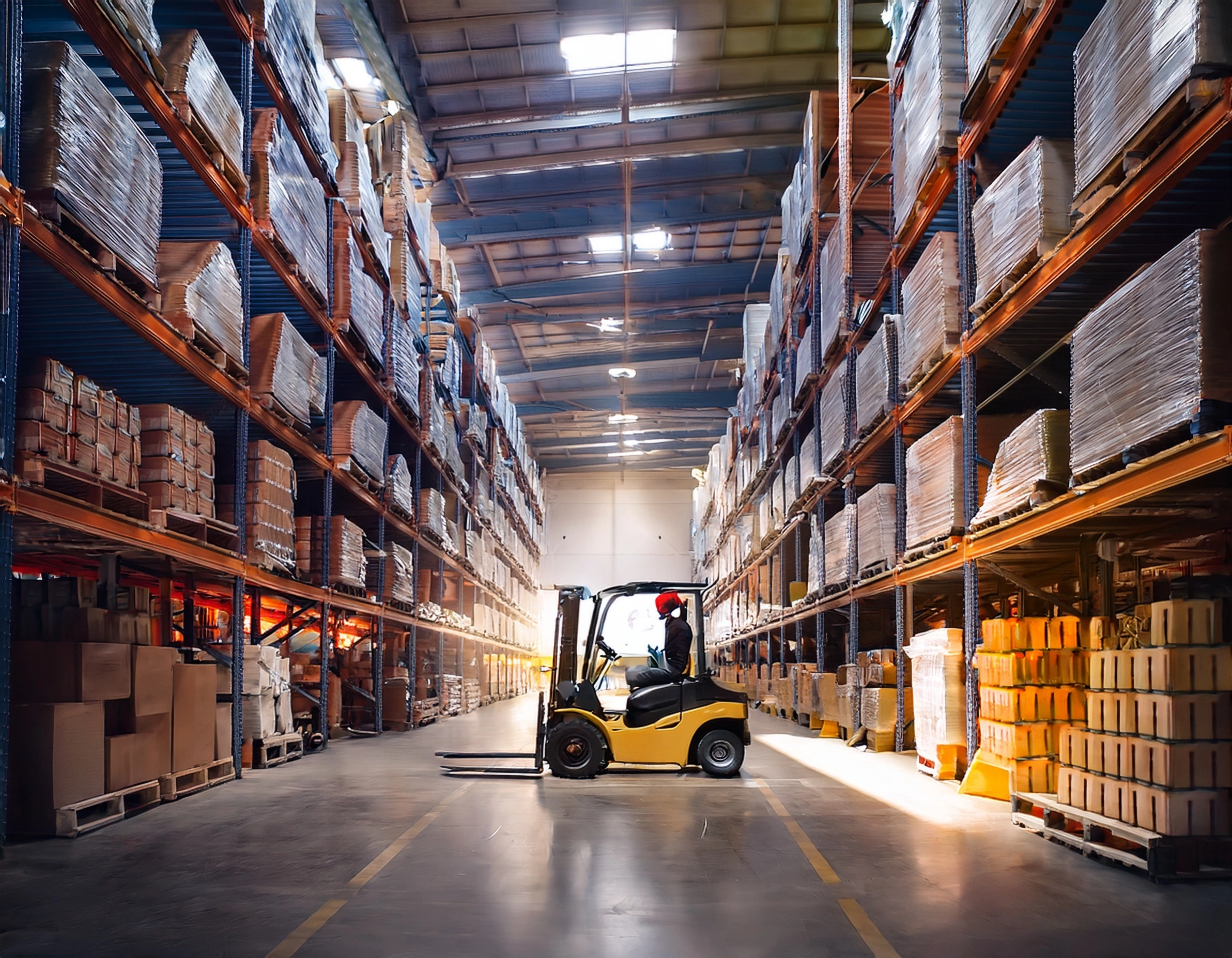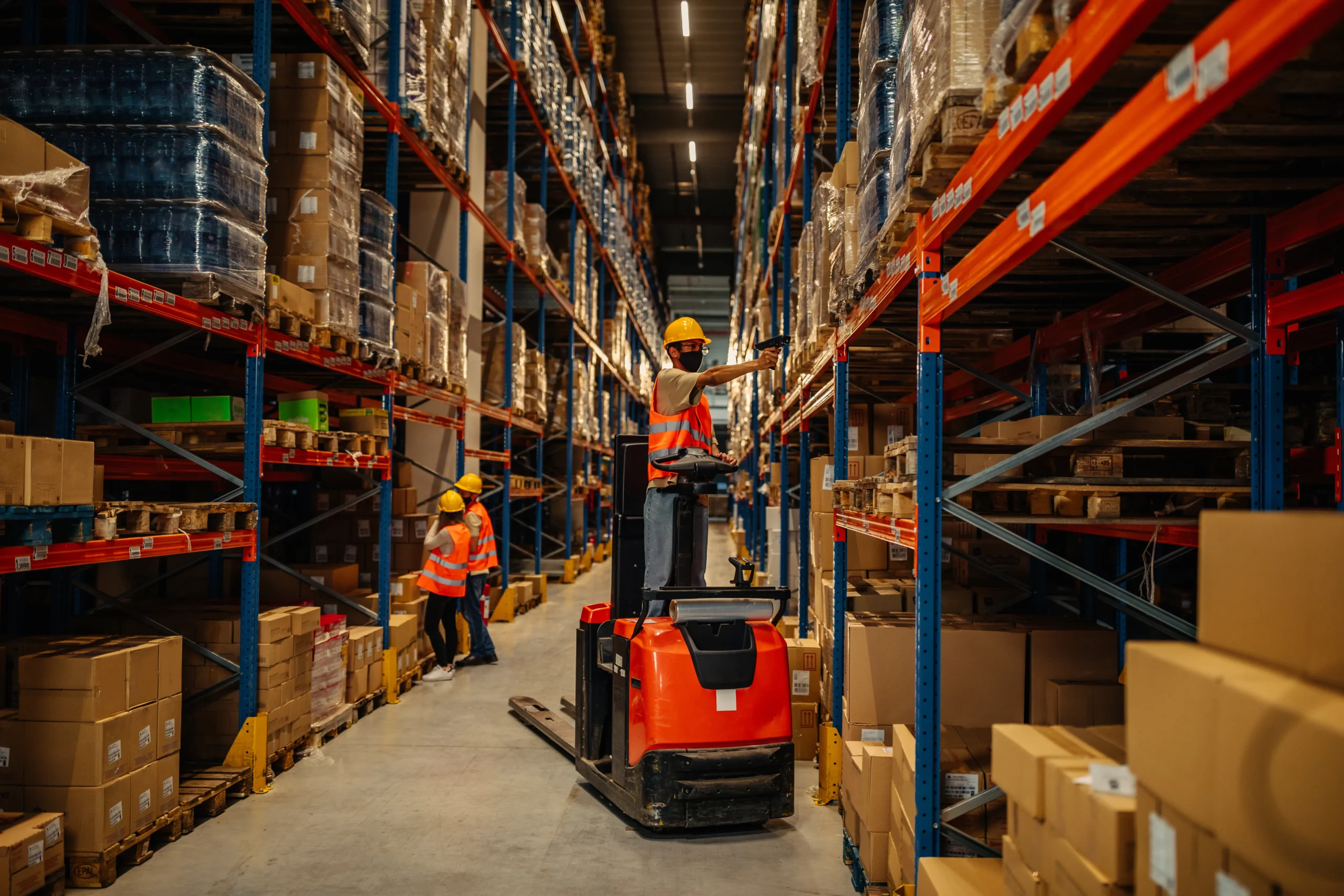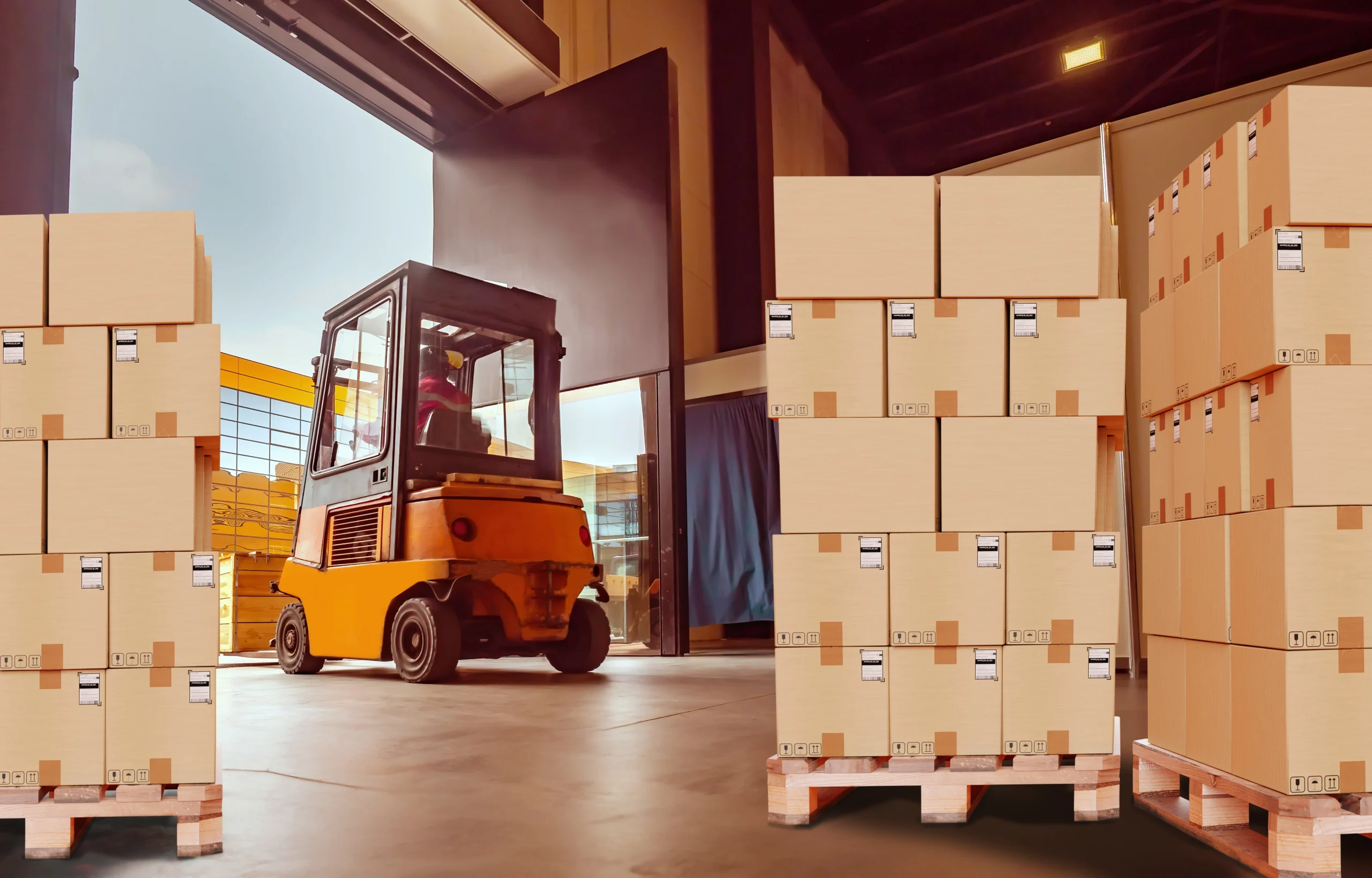
Forklifts are indispensable to modern warehouse operations, yet they remain one of the most persistent safety risks. In the United States alone, forklifts are associated with tens of thousands of injuries and numerous fatalities each year, with warehousing and logistics environments accounting for a significant share. Most of these incidents are preventable only if organizations move beyond reactive safety practices toward real-time, intelligence-driven interventions.
Traditional controls such as operator training, mirrors, floor markings, and basic proximity alarms often fall short in high-density, multi-shift environments where pedestrian and vehicle interactions are constant, layouts evolve, and contractor presence is high. Forklift Safety Intelligence, powered by context-aware computer vision and edge AI, addresses these gaps by enabling real-time object detection, trajectory prediction, and risk-based alerts.
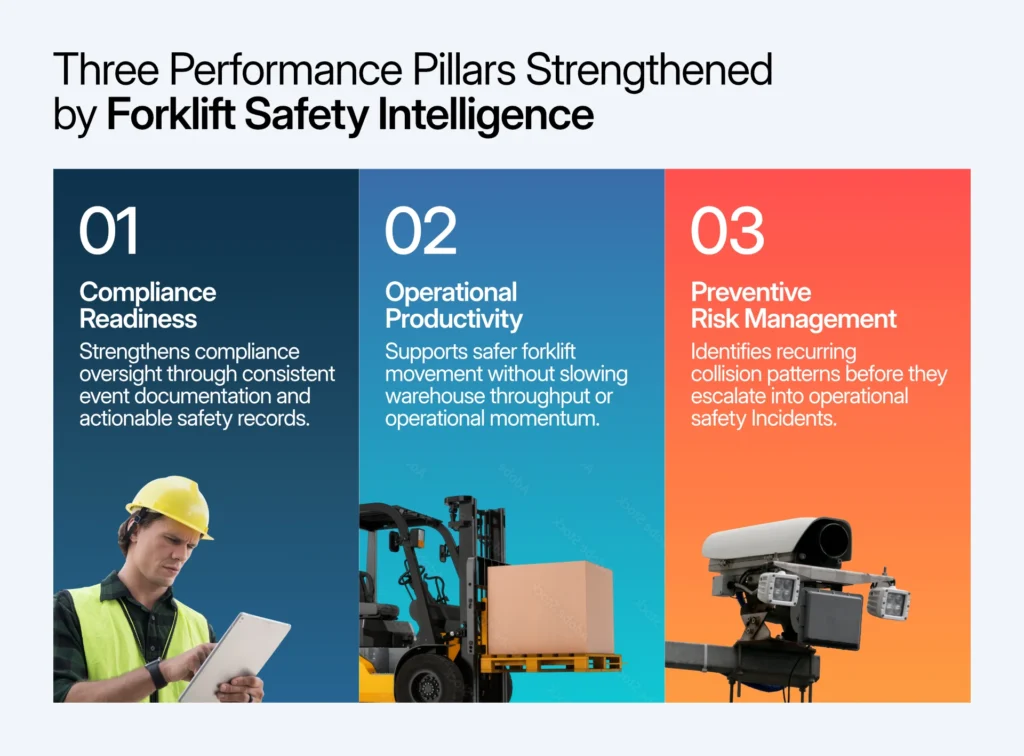
This shift enables warehouse operators to strengthen three critical pillars of performance: regulatory compliance, productivity, and risk reduction.
Contents In This Blog
Advancing Audit-Ready Compliance Across Warehouse Operations
Warehouse safety compliance requires consistent documentation, traceability, and audit readiness under standards such as OSHA 1910.178 and ISO 45001. However, manual reporting and incident-based tracking often leave gaps in visibility.
Forklift Safety Intelligence systems automatically capture and classify safety events including pedestrian proximity, restricted zone violations, and potential collision scenarios with precise timestamps, contextual video evidence, and operator attribution.
This creates a tamper-resistant, searchable audit trail that demonstrates due diligence during inspections and internal audits. More importantly, it shifts safety reporting from lagging indicators (injuries and incidents) to leading indicators such as near-miss frequency, unsafe behaviors, and response times.
For facilities with contractor-heavy operations or multiple sites, centralized dashboards enable standardized monitoring and simplify compliance oversight across locations reducing administrative burden and liability exposure.
Enhancing Warehouse Productivity Through Safety Intelligence
Forklift-related disruptions, whether incidents or near-misses have direct and indirect operational costs, including downtime, damaged goods, investigation time, and workflow interruptions.
Forklift safety intelligence minimizes these disruptions through proactive, context-aware alerts and actionable operational insights.
Operators receive precise alerts that improve situational awareness in blind spots and high-traffic zones, allowing them to maintain safe speeds without unnecessary hesitation. At the same time, supervisors gain access to heatmaps, congestion patterns, and behavioral insights that support data-driven decisions.
These insights enable:
- Optimized warehouse layouts and aisle configurations
- Improved traffic flow and routing strategies
- Targeted operator coaching and training interventions
The result is a more predictable, efficient material flow where safety enhances throughput rather than constraining it.
Enabling Measurable Forklift Risk Control at Scale
Traditional safety programs are often reactive and focused on recording and analyzing incidents after they occur. However, a large portion of operational risk exists in unreported near-misses and unsafe interactions.
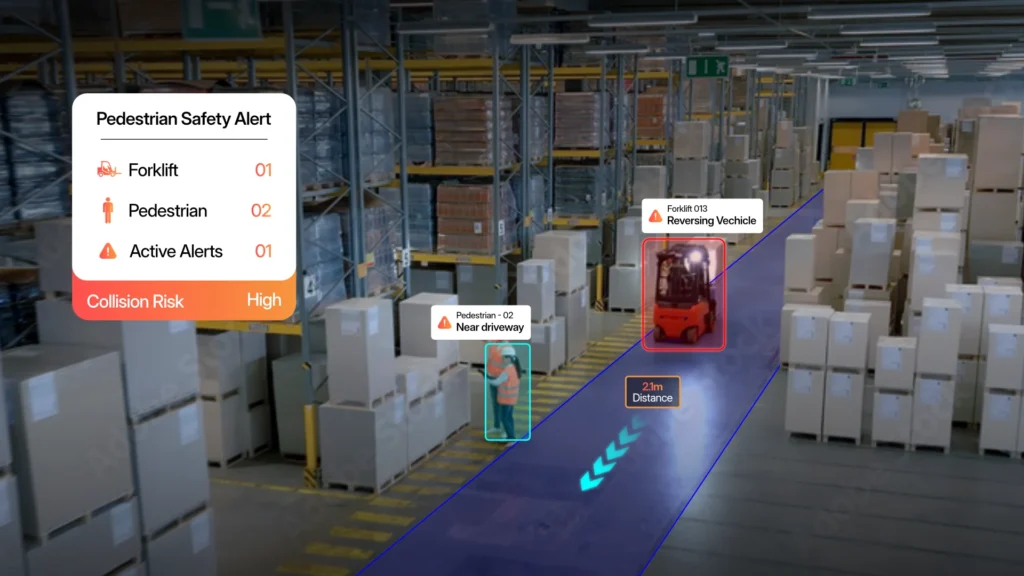
AI-powered forklift safety intelligence systems continuously monitor the environment, identifying and classifying objects (e.g., pedestrians vs. static obstacles), analyzing movement trajectories, and issuing graded alerts only when a genuine risk threshold is crossed.
This approach significantly reduces false alarms and improves operator trust. Over time, the system generates a high-resolution dataset that uncovers systemic risk patterns, such as time-based congestion during shift changes, high-risk zones within warehouse layouts, and repetitive unsafe behaviors or procedural gaps.
These insights enable targeted interventions such as infrastructure improvements, process changes, and focused safety training. Organizations typically observe measurable outcomes, including reduced near-misses, lower incident rates, improved safety compliance scores, and a stronger safety culture driven by proactive risk management.
Real-World Application
In high-traffic dock areas during shift transitions, Forklift Safety Intelligence delivers precise alerts based on real-time geometry and movement, turning potential collisions into controlled interactions. In narrow aisles with mixed pedestrian activity, dynamic risk scoring enables operators to adjust behavior instantly. Meanwhile, monthly safety reviews evolve from basic incident tracking to data-driven strategy discussions focused on prevention and continuous improvement.
Transforming Warehouse Safety into a Strategic Advantage
Forklift safety intelligence represents a fundamental shift in warehouse safety, from reactive monitoring to proactive intelligence-led operations. By integrating advanced computer vision and edge AI within platforms like T-Pulse, organizations gain unified visibility into risks, behaviors, and operational patterns.
This enables simultaneous improvements in compliance, productivity, and risk reduction which transforms safety from a cost center into a strategic advantage. For warehouse leaders focused on operational excellence, adopting this technology through targeted pilots and operator engagement can deliver rapid, measurable impact while building a foundation for long-term resilience.
Ready to evaluate how forklift safety intelligence can transform your warehouse operations? Schedule a personalized demonstration with our industrial safety specialists to assess your risk profile and identify optimization opportunities.
FAQs
1. What is forklift safety intelligence and how does it improve warehouse safety?
Forklift Safety Intelligence uses AI-powered visual processing and computer vision to monitor warehouse activity in real time. It detects pedestrians, vehicles, and obstacles, evaluates collision risk based on movement context, and delivers graded alerts that help reduce blind-spot incidents and near-miss exposure.
2. How does AI-powered forklift safety help with regulatory compliance (OSHA, ISO 45001)?
It automatically logs classified events with timestamps, video evidence, and operator details, creating a strong audit trail. This supports OSHA 1910.178 and ISO 45001 by providing leading indicators like near-miss trends instead of only lagging injury data, simplifying audits and reducing liability.
3. Can forklift safety intelligence improve warehouse productivity while reducing risk?
Yes. It minimizes downtime from incidents and damage while giving operators trusted alerts for safer, confident movement. Supervisors use heatmaps and insights to optimize layouts and traffic flow, resulting in smoother operations and higher throughput.
4. Does forklift safety intelligence work on mixed fleets and existing warehouse cameras?
Yes. Modern systems are designed for easy retrofit. They can connect with existing CCTV where feasible or use vehicle-mounted cameras, making them suitable for mixed fleets without major infrastructure changes.
5. What are the typical results and ROI of implementing forklift collision avoidance systems?
Many warehouses see significant reductions in near-misses and incidents within months, plus lower damage and investigation costs. ROI comes from reduced downtime, stabilized insurance premiums, and improved efficiency, especially when starting with targeted pilots.