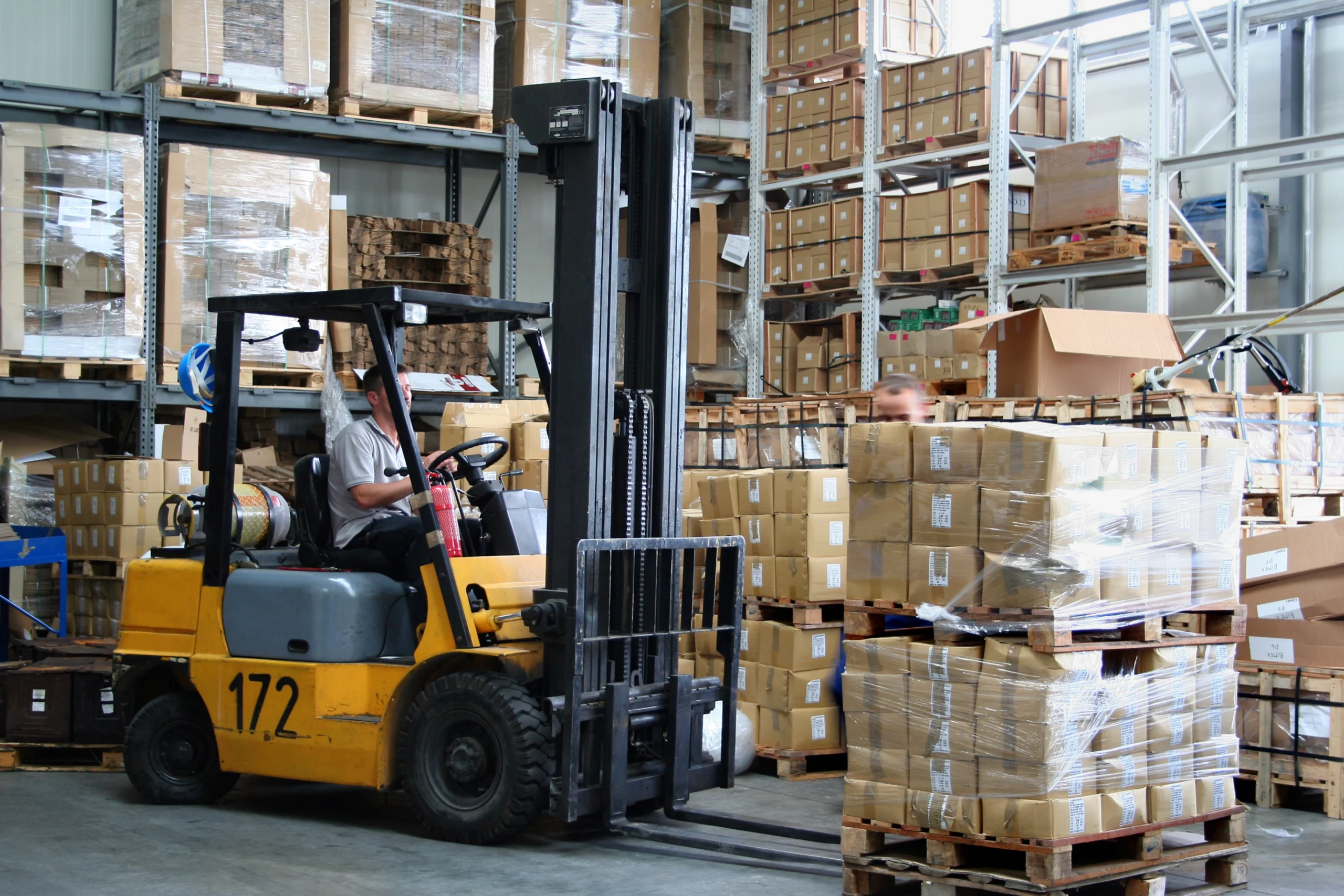
Forklift hotspots are frequently treated as isolated safety concerns. In reality, they often reveal deeper insights into how a warehouse is functioning. When the same intersections, aisles, loading docks, or pedestrian routes generate repeated close interactions, the underlying issue may lie in traffic design, staging practices, visibility constraints, or the sequencing of work.
For logistics, operations, and EHS leaders, these recurring patterns offer a practical view of where risk and operational pressure are building together. This article examines how forklift hotspots can be read as performance signals and how intelligent collision avoidance systems bring those patterns into clear focus supporting safer, more consistent, and more predictable warehouse performance.
Contents In This Blog
Why Traditional Reviews Miss Recurring Risk Patterns
Warehouse reviews typically rely on incident records, scheduled inspections, operator feedback, and direct observation. These methods provide valuable oversight, yet they often fail to capture every interaction occurring between reviews especially in high-traffic zones where conditions shift from one shift to the next.
This creates a visibility gap around recurring risk interactions. Without continuous, location-linked data, these interactions remain scattered across separate reports or shifts. When viewed collectively, however, they can reveal where a specific route, zone, or task is repeatedly creating pressure. Persistent hotspots can disrupt traffic flow, slow material movement, and reduce overall execution consistency across the warehouse.
How Forklift Hotspots Disrupt Warehouse Performance
Recurring forklift hotspots influence performance by reducing movement efficiency, interrupting connected workflows, and weakening predictability across shifts:
- Hidden Movement Capacity Loss Repeated conflict points absorb productive time through waiting, braking, cautious entry, and daily route deviations, reducing usable movement capacity.
- Workflow Queue Propagation A single hotspot can interrupt linked tasks, creating cumulative delays across replenishment, picking, staging, and dock operations.
- Planning Accuracy Degradation Persistent delays gradually separate planned task times from actual performance, reducing confidence in labor planning, routing, and dispatch accuracy.
- Inventory and Infrastructure Integrity Loss Minor contacts and abrupt maneuvers can damage products, pallets, vehicles, or racking triggering inspections, area restrictions, and unscheduled recovery work.
- Alert Saturation and Response Variability High alert density increases cognitive load and response inconsistency, particularly when multiple warnings compete for attention in constrained zones.
These effects are difficult to manage through periodic review alone. Continuous intelligence is required to link repeated interactions with their performance consequences.
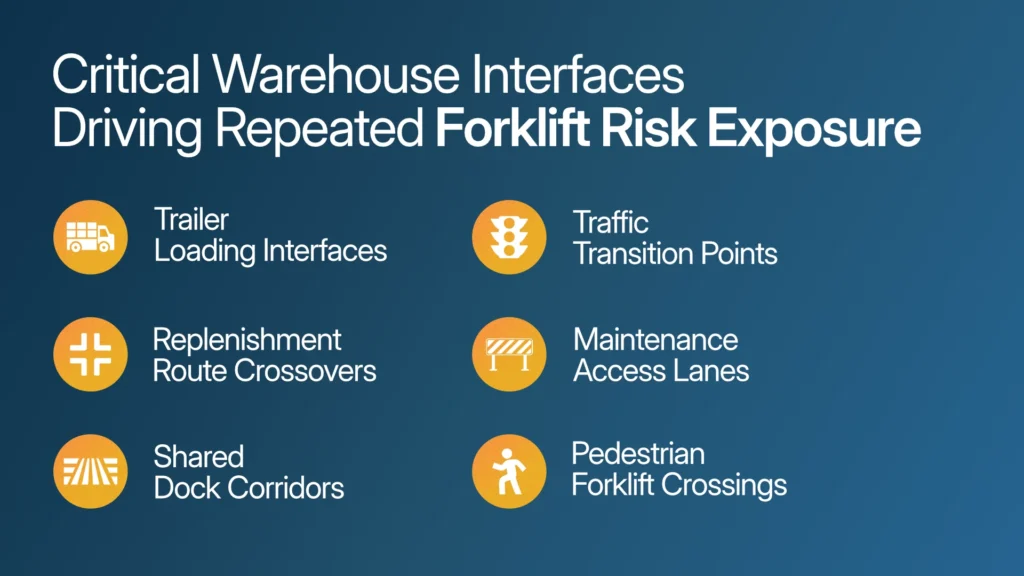
How Intelligent Collision Avoidance Turns Hotspots into Operational Gains
Detect Technologies’ Intelligent Collision Avoidance System (ICAS) brings continuous situational awareness to forklift operations. Using forklift-mounted cameras, computer vision, and on-device AI processing, it identifies relevant movement conflicts and analyzes recurring interactions by location, direction, timing, and severity during live operations.
ICAS converts recurring conflicts into actionable evidence for targeted warehouse decisions through five key mechanisms:
1. Context-Aware Risk Qualification: ICAS interprets each interaction through object classification, travel direction, proximity, and configured risk zones. Thisfocuses analysis on interactions with genuine collision potential.
Performance Gain: Reduces nuisance alerts, preserves operator attention, and builds trust in warnings which supports steadier forklift movement in shared environments.
2. Spatial Risk and Traffic Pattern Analytics: Qualifiedinteractions are aggregated across routes, intersections, shifts, and movement directions. These patterns reveal whether a hotspot is spatial, time-dependent, directional, or process-related.
Performance Gain: Identifies structural pressure points that floor plans and isolated observations often miss, enabling evidence-led redesign of routes, crossings, and staging zones.
3. Distinguishing Localized Delay from Systemic Flow Constraints: When forklifts repeatedly wait, brake, or divert at the same location, ICAS evidence helps determine whether the pattern is isolated or reflects a recurring constraint in traffic flow, staging, or sequencing.
Performance Gain: Improves diagnosis before leaders incorrectly attribute reduced utilization to fleet size, staffing levels, or individual operator performance.
4. Leading-Indicator Near-Miss Intelligence: Automatically captured near-misses reveal interactions that may never reach formal reporting channels. Analyzed by location, severity, recurrence, and direction, they show where collision exposure is building.
Performance Gain: Surfaces emerging risks earlier than incident-based reviews and replaces anecdotal evidence with traceable intelligence across shifts.
5. Evidence-Based Investment Prioritization: Hotspot data provides a credible basis for prioritizing physical and procedural investments by comparing recurrence, severity, persistence, and interaction context.
Performance Gain: Improves capital discipline and creates an auditable record for approval, intervention design, and post-implementation review.
Measuring Performance Gains Across Warehouse Operations
Key indicators that demonstrate improvement include:
- Lower false-alarm frequency and improved movement continuity
- More orderly and predictable traffic patterns
- Increased productive forklift time (less waiting for clearance)
- Greater accuracy in task-time standards and planning assumptions
- Sustained throughput consistency during peak demand, staffing changes, and congestion
These metrics allow leaders to verify gains, compare interventions, and strengthen decision-making across planning, capital allocation, and continuous improvement.
Embedding Forklift Risk Intelligence into Warehouse Governance
In multi-shift and multi-site operations, forklift risk intelligence creates a consistent view of recurring exposure across facilities and operating conditions. When embedded in warehouse governance, it helps leadership align safety priorities with operating plans, capital decisions, and continuous improvement initiatives.
Detect Technologies’ ICAS delivers structured, traceable evidence from live forklift interactions, turning recurring hotspots from reactive safety concerns into strategic performance opportunities.
Ready to turn forklift hotspots into measurable performance gains? Evaluate how Detect Technologies’ Intelligent Collision Avoidance System can provide continuous visibility into risk patterns and support more disciplined operational decisions across your warehouse network. Schedule a personalized ICAS demo
FAQs
1. What are forklift hotspots and why do they matter beyond safety?
Hotspots are locations with repeated close interactions. Beyond collision risk, they often signal deeper issues in traffic design, staging, visibility, or workflow sequencing that reduce overall warehouse efficiency and predictability.
2. How does intelligent collision avoidance differ from traditional hotspot reviews?
Traditional reviews rely on periodic observation and reported incidents. Intelligent systems continuously capture and classify interactions, revealing patterns by location, timing, direction, and severity that would otherwise remain invisible.
3. Can hotspot data improve warehouse planning and capital decisions?
Yes. Aggregated near-miss and interaction data provides objective evidence for prioritizing layout changes, process adjustments, or infrastructure investments where they will deliver the greatest operational return.
4. How quickly can performance gains from addressing hotspots be observed?
Many sites see improved movement continuity and reduced disruption within weeks of targeted interventions guided by continuous data, with stronger planning accuracy and throughput resilience following as patterns stabilize.
5. Does ICAS support multi-site warehouse networks?
Yes. Centralized, structured data from live operations enables consistent visibility, benchmarking, and standardized improvement across multiple facilities and shifts.